
The Fall and Return of Finnegan
Finnegans WakeThis flow traces the archetypal fall of Finnegan from builder and public figure into a body imagined as buried, remembered, and capable of waking again.
increasing Bearing strength in each event
 decreasing
Bearing strength in each eventdecreasingThe Builder Rises
The Builder Rises
Work and stature
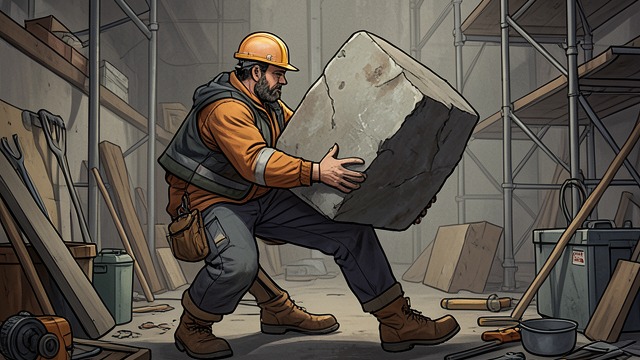
Finnegan appears as a master builder whose labor raises a structure from near nothing. His work makes him a civic giant as well as a comic, unstable figure.
A life made monumental
The account turns construction into a model for human ambition: each achievement also prepares the ground for a fall.
The Wall's Fatal Fall
The Wall's Fatal Fall
Sudden collapse
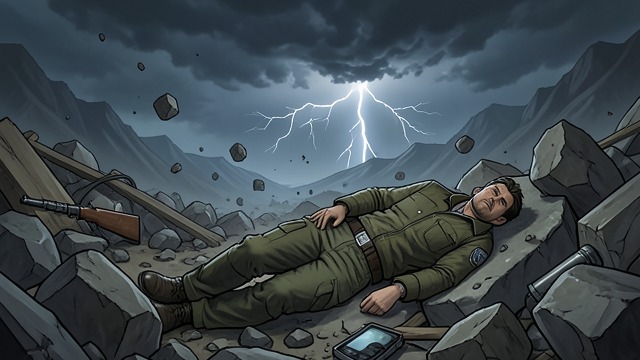
The legendary builder falls beside the wall, and the narrative makes the accident immense through a thunderous cascade of sound.
A beginning disguised as an ending
His fall creates the central uncertainty: death may be a final event, or the first movement of another cycle.
The Wake Begins
The Wake Begins
Collective mourning
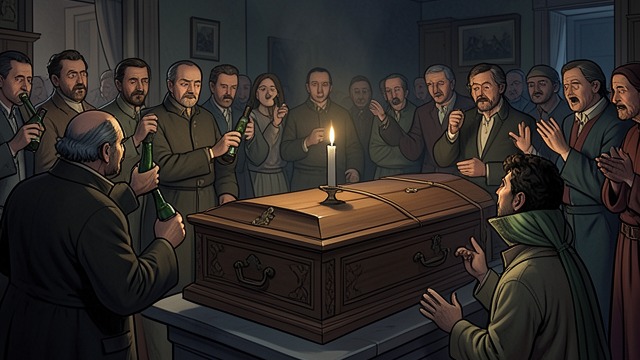
Mourners gather to lament and celebrate the fallen man, turning grief into drink, song, and communal performance.
Death becomes an event
The wake gives Finnegan a public afterlife. What happened to one man becomes a story everyone can alter and repeat.
Burial Becomes Uncertain
Burial Becomes Uncertain
The body in the mound
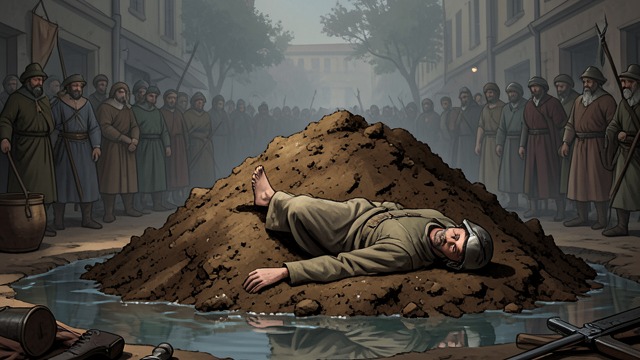
The narrative repeatedly imagines Finnegan beneath earth and water, yet never stabilizes his burial as a completed fact.
Memory keeps him active
His supposed remains continue to organize the community's speech, fears, and expectations of return.
The Cycle Opens Again
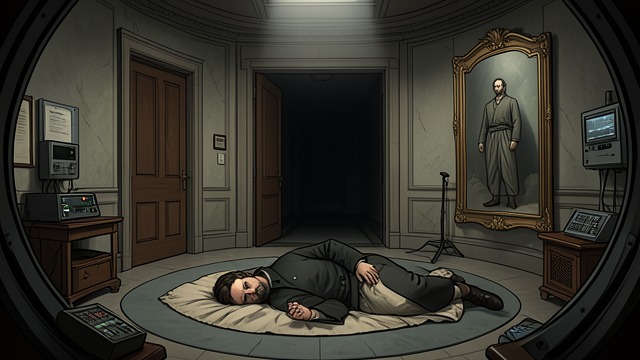
The Cycle Opens Again
An unfinished ending
The closing words run back toward the book's opening, making the ending read like a new beginning.
Return instead of closure
Finnegan's fall and wake remain available to recur. The book leaves the reader inside a cycle rather than outside it.
At the opening account of Finnegan’s life
At the opening myth of the fall
Immediately after the fall
After the early wake celebrations
At the final line of the book
